
Neural Networks: AI's Revolutionary Learning Path
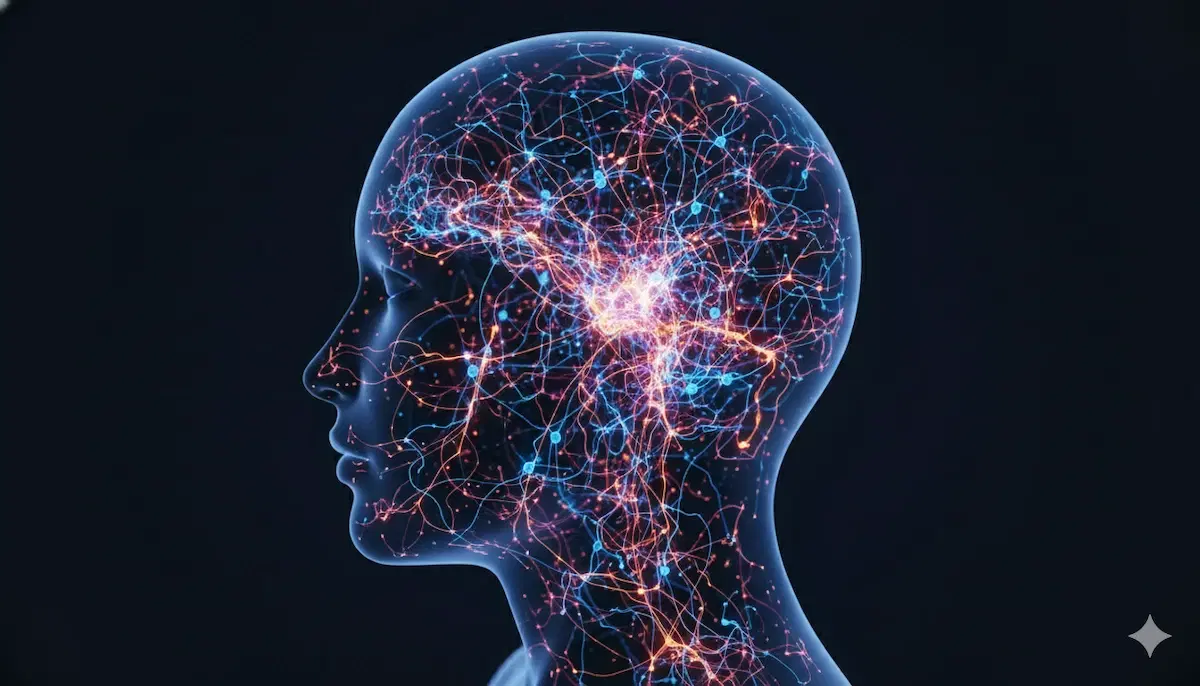

Artificial neural networks power countless applications that improve daily life. From healthcare diagnostics to entertainment recommendations, these systems deliver tangible value across industries.
Medical imaging benefits enormously from neural network analysis. AI systems can detect cancers, fractures, and other conditions with remarkable accuracy. Autonomous vehicles use computer vision to navigate safely through complex environments.
Security systems employ facial recognition for access control and surveillance. These applications demonstrate how pattern recognition capabilities translate into real-world benefits.
Conversational AI systems like ChatGPT showcase the power of large neural networks. These models understand context, generate human-like responses, and assist with complex tasks. Language translation services break down communication barriers worldwide.
Sentiment analysis helps businesses understand customer feedback and market trends. Text generation assists writers, marketers, and content creators in producing engaging material.
E-commerce platforms use neural networks to personalize shopping experiences. These systems analyze user behavior, preferences, and purchase history to suggest relevant products. Financial institutions employ AI for fraud detection and risk assessment.
Healthcare organizations leverage predictive analytics to identify at-risk patients and optimize treatment plans. These applications demonstrate how AI creates value through improved decision-making.
Getting started with neural networks doesn't require advanced degrees in mathematics. Modern tools and frameworks make AI engineering accessible to developers and data scientists with basic programming skills.
TensorFlow and PyTorch are the most popular frameworks for building neural networks. These platforms provide pre-built components, optimization algorithms, and debugging tools. Cloud-based services like Google Colab offer free access to powerful computing resources.
Python remains the preferred programming language for AI development. Its extensive libraries and community support make it ideal for both beginners and experts.
Start by defining your problem clearly. Collect and prepare relevant data, ensuring quality and completeness. Design your network architecture based on the problem type and data characteristics.
Train your model using appropriate optimization techniques. Monitor performance metrics and adjust parameters as needed. Validate results on separate test data to ensure generalization.
While neural networks are powerful, they're not always the best solution. Understanding when to use different AI algorithms helps organizations make informed technology decisions.
Decision trees and random forests work well for structured data with clear relationships. They're interpretable and require less computational power than neural networks. Support vector machines excel at classification tasks with limited data.
Choose neural networks when dealing with unstructured data, complex patterns, or large datasets. Their ability to learn hierarchical features makes them superior for image, text, and audio processing.
Deep learning models with many layers can capture complex relationships but require substantial computational resources. Shallow models train faster and work well for simpler problems.
Consider your available resources, data size, and accuracy requirements when choosing between approaches. Sometimes simpler models provide better value and faster deployment.
What is the neural network of artificial intelligence?
An artificial intelligence neural network is a computing system modeled after biological neural networks. It consists of interconnected artificial neurons that process information and learn from data to make predictions or decisions.
Is ChatGPT a neural network?
Yes, ChatGPT is built on a transformer neural network architecture. It uses deep learning techniques to understand and generate human-like text responses based on patterns learned from vast amounts of training data.
What are the main types of neural networks?
The main types include feedforward networks for basic classification, convolutional neural networks (CNNs) for image processing, recurrent neural networks (RNNs) for sequential data, and transformer networks for natural language processing.
How do neural networks differ from biological neural networks?
Artificial neural networks use mathematical calculations and digital processing, while biological networks use electrochemical signals. Artificial networks are faster but less flexible, while biological networks are slower but more adaptable and energy-efficient.
What programming languages are best for neural network development?
Python is the most popular choice due to its extensive AI libraries like TensorFlow and PyTorch. R, Julia, and JavaScript are also used, but Python offers the best combination of ease of use and powerful tools.
How long does it take to train a neural network?
Training time varies greatly depending on network size, data volume, and computational resources. Simple networks may train in minutes, while large language models can require weeks or months using powerful hardware clusters.
Neural networks represent one of the most significant advances in artificial intelligence. Their ability to learn from data and recognize complex patterns makes them invaluable for solving real-world problems. As these technologies continue evolving, they'll create new opportunities for innovation across industries. Whether you're a business leader, developer, or technology enthusiast, understanding neural networks will help you navigate our increasingly AI-driven world.
The human brain contains roughly 86 billion neurons, each forming thousands of connections with other neurons. This intricate network enables us to think, learn, and make decisions. Today, artificial intelligence neural networks are revolutionizing technology by mimicking this biological marvel. These sophisticated AI systems are transforming how machines process information, recognize patterns, and solve complex problems across industries.
Understanding neural networks is crucial for anyone working in technology, data science, or business leadership. These powerful AI algorithms form the backbone of modern machine learning applications, from voice assistants to autonomous vehicles. Let's explore how these remarkable systems work and why they're reshaping our digital future.
An artificial intelligence neural network is a computing system inspired by biological neural networks. These AI models consist of interconnected nodes (artificial neurons) that process and transmit information. Unlike traditional programming, neural networks learn from data, identifying patterns and making predictions without explicit instructions.
The beauty of neural networks lies in their ability to adapt and improve. They excel at tasks that are difficult to program explicitly, such as recognizing faces in photos or understanding spoken language. This flexibility makes them invaluable for modern AI applications.
While artificial neural networks draw inspiration from the human brain, they operate quite differently. Biological neurons communicate through electrical and chemical signals, while artificial neurons use mathematical calculations. However, both systems share key principles:
Information flows through interconnected networks
Learning occurs through strengthening or weakening connections
Complex behaviors emerge from simple interactions
Pattern recognition improves with experience
The main difference is speed and scale. Biological brains process information slowly but handle millions of parallel operations. AI algorithms process data much faster but typically require more structured approaches to learning.
Neural network architecture consists of several essential elements. Input layers receive raw data, such as images or text. Hidden layers process this information through mathematical transformations. Output layers provide final results or predictions.
Each connection between neurons has a weight that determines its influence. During training, these weights adjust to improve accuracy. Activation functions decide whether neurons should "fire" based on incoming signals. This structure enables cognitive computing capabilities that mirror human-like reasoning.
Machine learning employs various neural network types, each designed for specific tasks. Understanding these architectures helps organizations choose the right approach for their needs. Let's examine the most important types and their applications.
Feedforward networks represent the simplest neural network type. Information flows in one direction, from input to output, without loops or cycles. These networks excel at classification tasks and basic pattern recognition problems.
Single-layer perceptrons handle linearly separable data, while multi-layer versions tackle more complex problems. Despite their simplicity, feedforward networks form the foundation for understanding more advanced architectures.
CNNs revolutionized computer vision and image processing. These AI models use specialized layers that detect features like edges, textures, and shapes. They're particularly effective for visual pattern recognition tasks.
Medical imaging, autonomous vehicles, and facial recognition systems rely heavily on CNN architectures. Their ability to identify spatial relationships makes them invaluable for visual AI applications.
RNNs process sequential data by maintaining memory of previous inputs. This makes them ideal for natural language processing, speech recognition, and time series analysis. Unlike feedforward networks, RNNs can handle variable-length inputs.
Long Short-Term Memory (LSTM) networks, a special type of RNN, solve the vanishing gradient problem. This advancement enabled breakthrough applications in language translation and text generation.
Modern AI engineering has produced sophisticated architectures like Transformer networks. These power large language models and enable remarkable natural language understanding. Generative Adversarial Networks (GANs) create realistic synthetic data by pitting two networks against each other.
These advanced architectures demonstrate the rapid evolution of deep learning technology. They're pushing the boundaries of what's possible in artificial intelligence applications.
Neural network learning involves adjusting millions of parameters to minimize prediction errors. This process, called training, requires large datasets and significant computational resources. Understanding how networks learn helps organizations implement effective AI solutions.
During forward propagation, data flows through the network, generating predictions. The network compares these predictions to actual results, calculating error rates. Backpropagation then adjusts weights throughout the network to reduce these errors.
This iterative process continues until the network achieves acceptable accuracy. Modern optimization algorithms make this training process more efficient and stable than early approaches.
High-quality training data is crucial for effective neural networks. Supervised learning uses labeled examples to teach networks correct responses. Unsupervised learning finds hidden patterns in unlabeled data.
Data preprocessing, feature selection, and augmentation techniques improve training outcomes. Preventing overfitting ensures networks generalize well to new, unseen data rather than memorizing training examples.