Expert Insights: AI Tools for Employees Driving Workforce Productivity

The modern workplace is experiencing a profound transformation. AI tools for employees are no longer futuristic concepts—they're practical solutions driving measurable productivity gains across industries. Recent studies show that organizations implementing AI workplace solutions see productivity increases of 20-40%, with employees saving 2-3 hours daily on routine tasks.
This shift represents more than technological advancement. It's about empowering your workforce with intelligent automation for staff that enhances human capabilities rather than replacing them. The key lies in understanding which tools deliver real value and how to implement them effectively.
AI tools for employees are intelligent software applications designed to augment human capabilities in the workplace. Unlike traditional software that requires explicit instructions, these tools learn from patterns, adapt to user behavior, and provide proactive assistance.
The impact is significant. Companies using AI workplace solutions report:
37% reduction in time spent on administrative tasks
25% improvement in decision-making speed
42% decrease in human errors
Enhanced employee satisfaction and engagement
These tools have evolved from simple automation to sophisticated systems that understand context, predict needs, and deliver personalized experiences. The ROI is compelling—organizations typically see returns within 6-12 months of implementation.
Modern teams need seamless communication across time zones and languages. AI powered employee tools in this category include meeting assistants that automatically transcribe conversations, extract action items, and schedule follow-ups. Smart scheduling tools analyze calendar patterns to find optimal meeting times, while real-time translation breaks down language barriers for global teams.
These solutions reduce meeting overhead by 30% and improve cross-cultural collaboration significantly. Teams report better alignment and faster decision-making when AI handles routine communication tasks.
Content creation consumes significant employee time. AI writing assistants help craft emails, reports, and proposals with improved clarity and consistency. Presentation design tools automatically format content into professional slides, while document analysis tools summarize lengthy reports into key insights.
Employees using these tools complete writing tasks 50% faster while maintaining higher quality standards. The consistency in communication also strengthens brand voice across the organization.
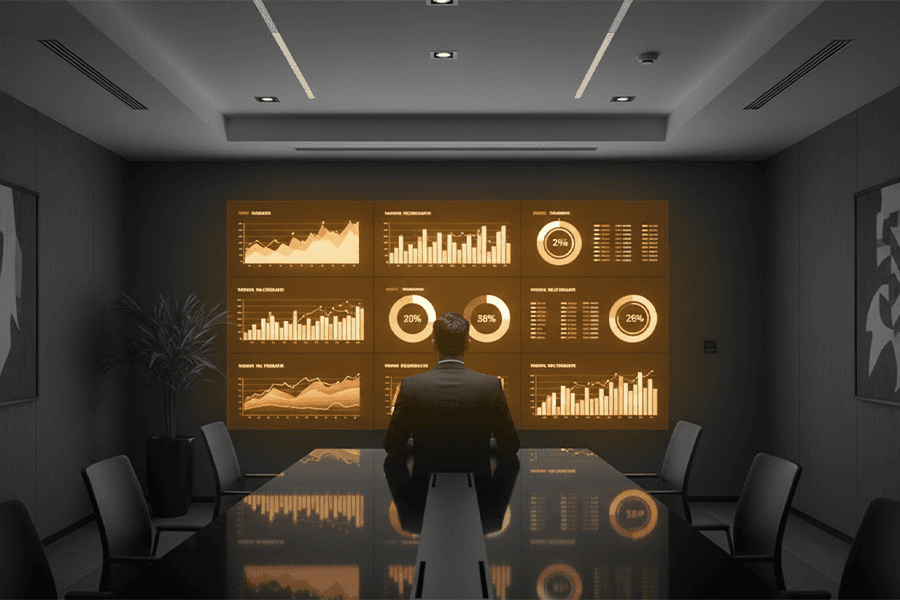
Data-driven decisions require accessible insights. AI for business productivity includes predictive analytics platforms that identify trends, automated reporting systems that generate real-time dashboards, and project management tools that optimize resource allocation.
These tools democratize data analysis, enabling non-technical employees to extract valuable insights. Organizations see 35% improvement in strategic decision-making when employees have AI-powered data support.
Several AI tools for employees offer immediate value with minimal learning curve:
ChatGPT and Claude: Versatile conversational AI for brainstorming, writing, and problem-solving
Grammarly: Real-time writing enhancement with tone and clarity suggestions
Notion AI: Workspace organization with intelligent content generation
Google Workspace AI: Smart compose, data insights, and automated formatting
Canva AI: Design automation for presentations and marketing materials
Otter.ai: Meeting transcription with speaker identification and action items
These tools offer free tiers that provide substantial value for individual productivity. The key is starting with one tool, mastering its capabilities, then gradually expanding your AI toolkit.
Successful AI employee training requires a structured approach. Organizations must first assess current skill levels and identify gaps between existing capabilities and AI-enhanced workflows.
Effective training programs focus on practical application rather than theoretical concepts. Employees learn best when they can immediately apply AI tools to their daily tasks. This hands-on approach builds confidence and demonstrates tangible value.
AI skills development should be ongoing, not one-time events. The AI landscape evolves rapidly, requiring continuous learning and adaptation. Organizations that invest in comprehensive training see 60% higher adoption rates and better ROI from their AI investments.
Key training components include:
Tool-specific workshops with real-world scenarios
Cross-departmental collaboration sessions
Regular skill assessments and progress tracking
Mentorship programs pairing AI-savvy employees with newcomers
AI in human resources streamlines hiring processes while reducing bias. AI-powered screening tools analyze resumes against job requirements, identifying qualified candidates more efficiently than manual review. These systems also schedule interviews automatically and provide insights into candidate fit.
Organizations using AI recruitment tools reduce time-to-hire by 40% while improving candidate quality. The technology also helps eliminate unconscious bias by focusing on skills and qualifications rather than demographic factors.
AI transforms performance management from annual reviews to continuous feedback. Analytics platforms track employee engagement, identify skill gaps, and recommend personalized development paths. This data-driven approach helps managers provide more targeted support and recognition.
Employees benefit from clearer career guidance and more relevant learning opportunities. Organizations see improved retention rates and higher employee satisfaction when AI supports performance management.
Sentiment analysis tools monitor employee feedback across various channels, identifying potential issues before they escalate. Predictive models help HR teams understand turnover risk and implement targeted retention strategies.
These insights enable proactive intervention, improving workplace culture and reducing costly turnover. Companies using AI for employee engagement report 25% lower attrition rates.
Successful implementation requires careful planning and change management. Start with a pilot program involving early adopters who can champion the technology and provide feedback.
Security and privacy considerations are paramount. Ensure all AI workplace solutions comply with data protection regulations and company policies. Establish clear guidelines for AI tool usage and data handling.
Integration with existing systems is crucial for adoption. Choose tools that work seamlessly with your current technology stack. Provide comprehensive training and ongoing support to ensure employees feel confident using new tools.
Measure success through specific KPIs:
Time savings on routine tasks
Quality improvements in deliverables
Employee satisfaction scores
Adoption rates across departments
ROI calculations based on productivity gains
The future workplace will see even deeper AI integration. Emerging technologies like multimodal AI will enable more natural interactions, while specialized industry tools will address specific professional needs.
Job roles will evolve rather than disappear. Employees who develop AI skills development capabilities will become more valuable, taking on strategic responsibilities while AI handles routine tasks.
Organizations must prepare for this transition by investing in continuous learning programs and fostering an AI-ready culture. The companies that succeed will be those that view AI as a tool for human empowerment rather than replacement.
Which is the best AI tool for work?
The best AI tool depends on your specific needs. For general productivity, ChatGPT excels at content creation and problem-solving, while tools like Notion AI integrate seamlessly with workspace management. Consider your primary use case when selecting AI workplace solutions.
What are AI tools at work?
AI tools at work are intelligent software applications that automate tasks, enhance decision-making, and boost productivity. They include chatbots for customer service, text generators for content creation, data analysis platforms, and collaboration enhancers that help teams communicate more effectively.
What are the 5 best AI tools for employees?
The top 5 AI tools for employees include: 1) ChatGPT for content creation and problem-solving, 2) Grammarly for writing enhancement, 3) Notion AI for workspace organization, 4) Otter.ai for meeting transcription, and 5) Zapier for workflow automation.
How can employees use AI tools for free?
Many AI tools offer free tiers including ChatGPT (limited usage), Grammarly (basic features), Google Workspace AI features, Canva AI (limited designs), and various browser extensions. These free AI tools for office work provide substantial value for individual productivity enhancement.
How do I train my employees on AI tools?
Start with hands-on workshops using real work scenarios. Focus on practical applications rather than theory. Provide ongoing support and create peer mentorship programs. Regular skill assessments help track progress and identify areas needing additional training.
What are the benefits of AI employee enablement?
AI employee enablement increases productivity by 20-40%, reduces errors by 42%, and saves 2-3 hours daily on routine tasks. Employees report higher job satisfaction when AI handles repetitive work, allowing them to focus on strategic and creative activities.